
Aircraft
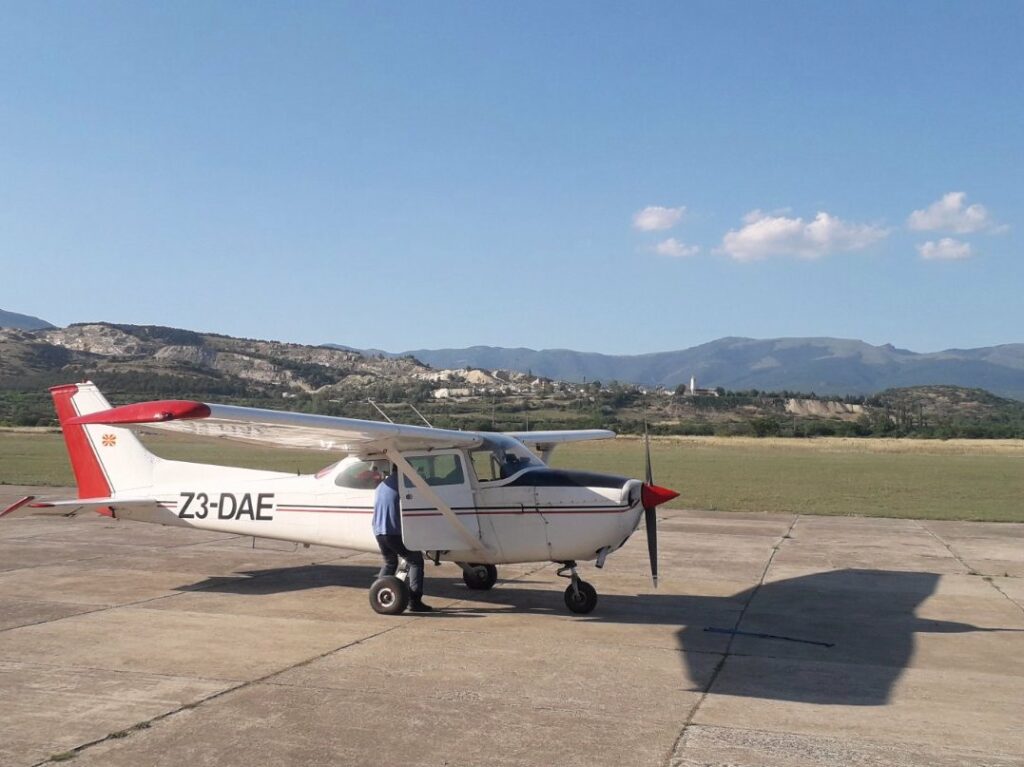
Cessna 172 Skyhawk
The Cessna 172 Skyhawk is an American four-seat, single-engine, high-wing aircraft manufactured by Cessna, first flown in 1955. It holds the distinction of being the most produced aircraft in aviation history, with over 44,000 units delivered as of 2015, and it remains in production today. In 1958, a Cessna 172 set a world flight endurance record that still stands. The aircraft also gained notoriety in 1987 when German teenager Mathias Rust flew a rented Cessna F172P from Helsinki through Soviet airspace, landing near Red Square in Moscow without being intercepted. Over its history, Air Club Skopje has operated three variants — the 172K, L, and M. The club currently flies a 1969-built Cessna 172K, used for basic pilot training, panoramic flights, fox rabies vaccine dispersal, and personal use.
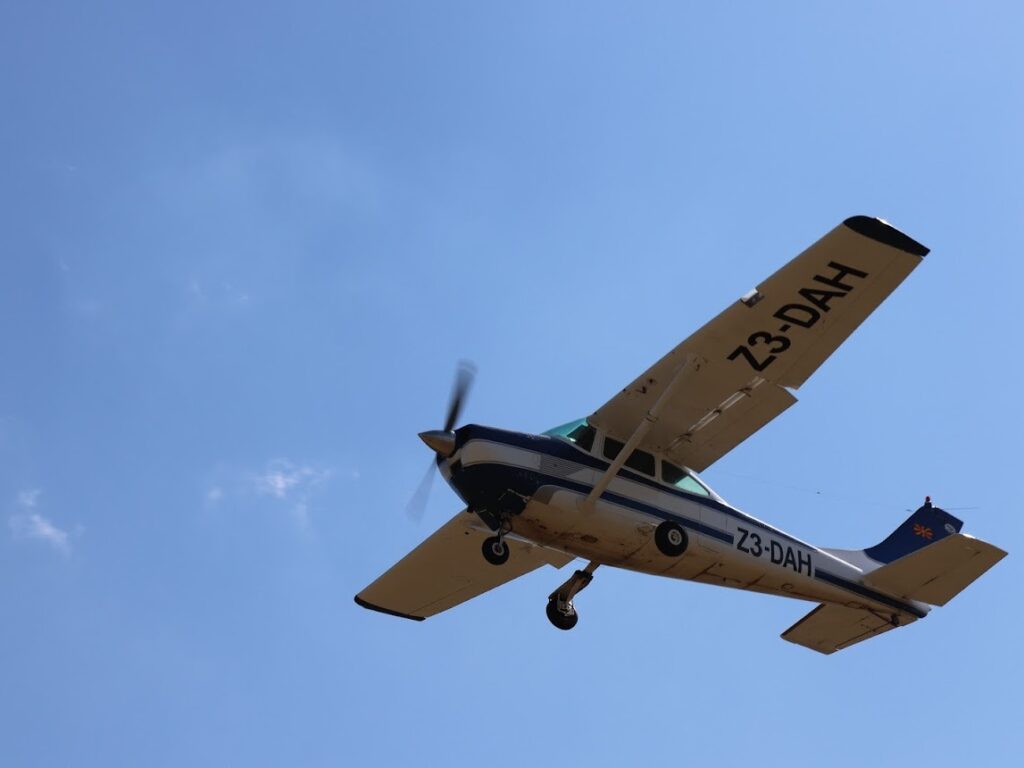
Cessna 182 Skylane
The Cessna 182 Skylane is an American four-seat, single-engine light aircraft built by Cessna in Wichita, Kansas, first introduced in 1956. It can optionally accommodate two additional child seats in the baggage area. Produced in numerous variants over the decades — including fixed and retractable gear versions and engines ranging from carbureted and fuel-injected to turbocharged and diesel — it remains the second most popular Cessna model after the 172 and is still in production today. It has a length of 8.6m, a wingspan of 10.9m, an empty weight of 730kg, and a maximum takeoff weight of 1,338kg. Power comes from a Continental O-470 six-cylinder carbureted engine with a constant-speed propeller, producing 230hp. It reaches a maximum speed of 270km/h, a cruise speed of 259km/h at 75% power at 2,000m, an economical speed of 211km/h at 3,000m, and a range of 1,100 to 1,865km. Aero Club Skopje has operated the 1964-built 182H variant since 2009, using it for glider towing, skydiving, banner towing, fox rabies vaccine dispersal, mosquito control, VIP transport, and personal flight.
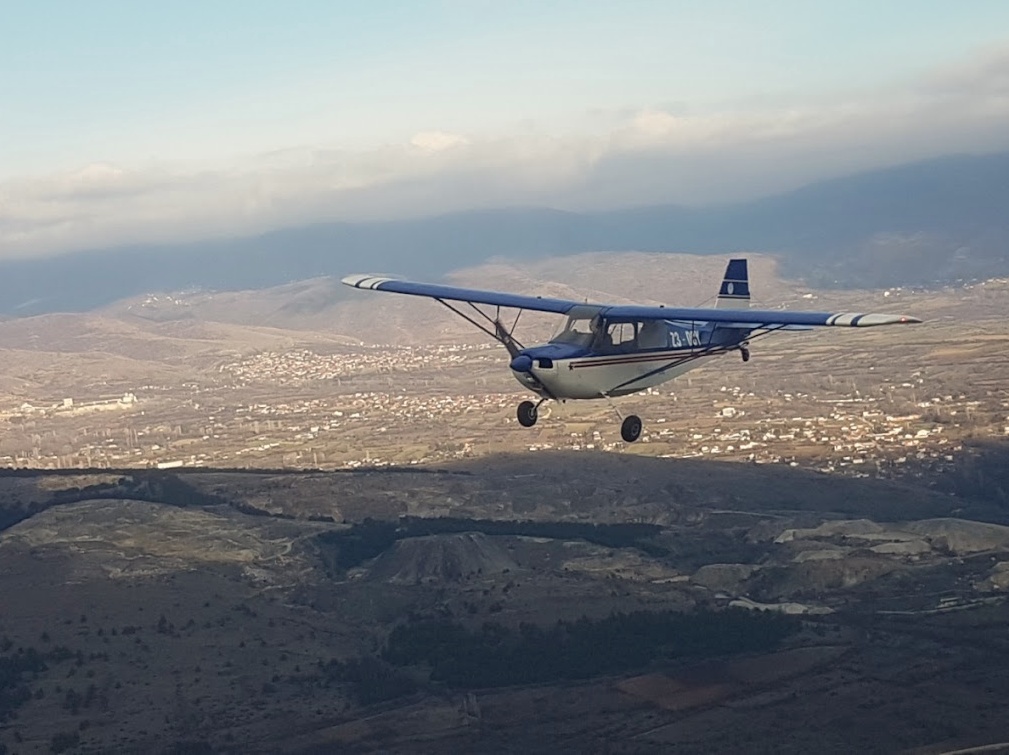
The American Champion Citabria
The Citabria is a light, single-engine, two-seat aircraft with fixed conventional gear, first produced in the United States in 1964. Designed for flight training, personal use, and utility roles, it is capable of sustaining aerobatic stresses from +5g to -2g — a capability reflected in its name, which spells “airbatic” backwards. At the time of its introduction, it was the only commercially produced aircraft in the US certified for aerobatics. Over the years it has served as a trainer, personal aircraft, bush plane, glider tow plane, and in agricultural and patrol roles. It is powered by a Lycoming O-320-A2B four-cylinder engine producing 150hp, with a two-bladed fixed-pitch propeller. It reaches a maximum speed of 209km/h, a cruise speed of 202km/h, a range of 761km, a service ceiling of 5,200m, and a climb rate of 5.7m/s. Air Club Skopje has operated two Citabria 7GCBC Explorer models throughout its history, used primarily for glider towing. The club currently owns one Citabria, which has been in active use since 1972.
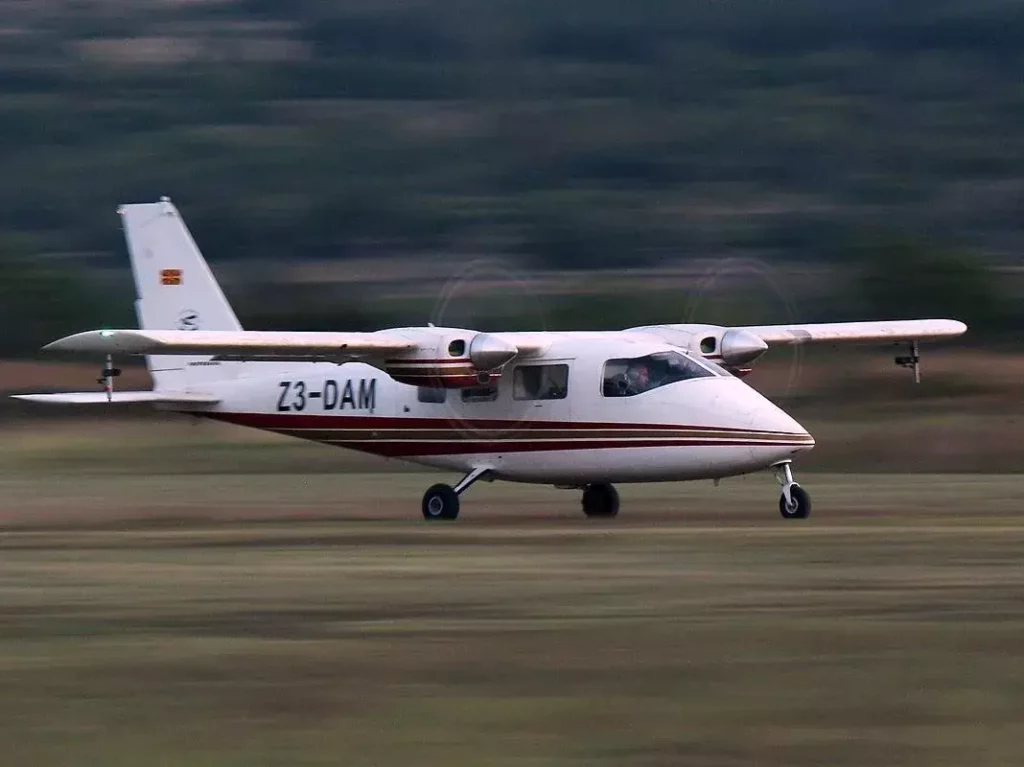
Partenavia P68
The Partenavia P.68, now produced as the Vulcanair P.68, is an Italian six-seat, twin-engine, high-wing monoplane first introduced in 1972 and still in production today. Originally designed for private and business use, it has since found wide application in training, light transport, police work, observation, medical transport, multi-engine and IFR rating training, and skydiving. It measures 9.55m in length with a 12.00m wingspan and 3.40m height, with an empty weight of 1,230kg and a maximum takeoff weight of 1,990kg. Power comes from two Lycoming IO-360-A1B6 fuel-injected, air-cooled flat-four engines producing 200hp each. The aircraft reaches a maximum speed of 322km/h at sea level, a cruise speed of 298km/h at 3,350m, a range of 2,112km, a service ceiling of 5,850m, and a climb rate of 7.6m/s. Aero Club Skopje operates two P.68 Victor models, used for VIP transport, fox rabies vaccine dispersal, mosquito control, and skydiving.